







By Salhiram Balthazar Brooklyn, NY – On the anniversary of Dr. Martin Luther King Jr.’s birth in 2026, the Brooklyn Academy of Music (BAM) did not merely host a commemorative event; it became a site of radical introspection. In a profound collaboration with Theater of War Productions, the stage was set for The Drum Major Instinct—a dramatic reading of Dr. King’s 1968 sermon that serves as one of his most haunting and diagnostic critiques of the human ego and social hierarchy.
The program was not a museum piece or a passive recital. Instead, it was a living, breathing dialogue that bridged the gap between the pulpit of Ebenezer Baptist Church and the complex political landscape of 2026 New York. By bringing together a cast of civic leaders, world-class actors, and a choir of activists and officers, the production transformed a historical speech into a mirror for the contemporary soul.
The Anatomy of the Instinct: Dr. King’s Final Warning
To understand the significance of this event, one must first look at the text itself. “The Drum Major Instinct,” delivered just two months before Dr. King’s assassination, centers on the innate human desire to be out front—to be first, to be recognized, and to be praised. King argues that this “instinct,” if left unchecked, leads to narcissism, racial superiority, and the destructive engine of militarism.
However, Dr. King does not call for the extinction of this instinct. Rather, he calls for its sublimation. He suggests that if a person must be first, let them be first in service; if they must be a drum major, let them be a drum major for justice. This nuanced take on leadership was the perfect thematic anchor for a room filled with the very people who currently hold the “baton” of public service in New York.
A Stage of Civic Power
The casting for this reading was a stroke of genius, utilizing Theater of War Productions’ signature style of using art to catalyze difficult conversations. The lectern saw a rotating assembly of voices that represent the gears of modern democracy:
- Jeffrey Wright: The acclaimed actor brought a gravitas and technical precision to the text, grounding the sermon in the power of professional oratory.
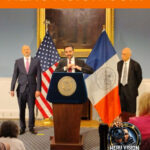
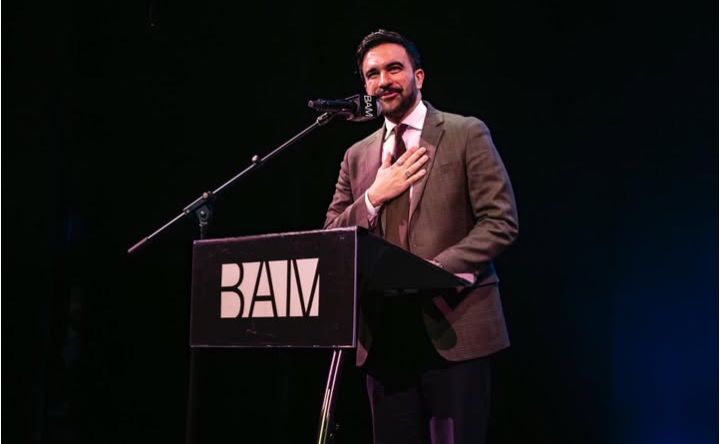
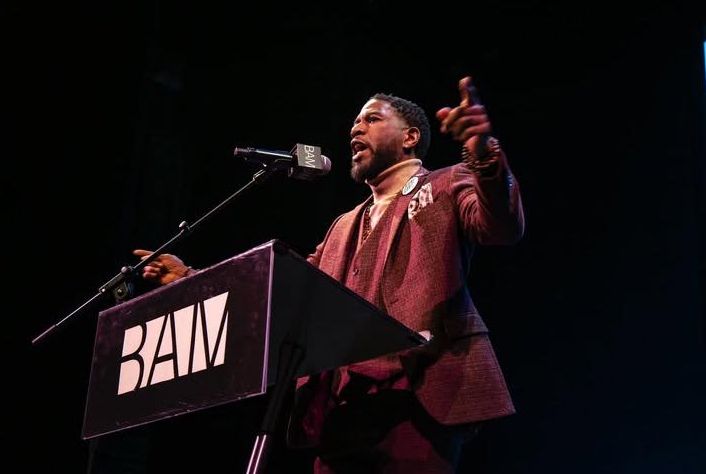
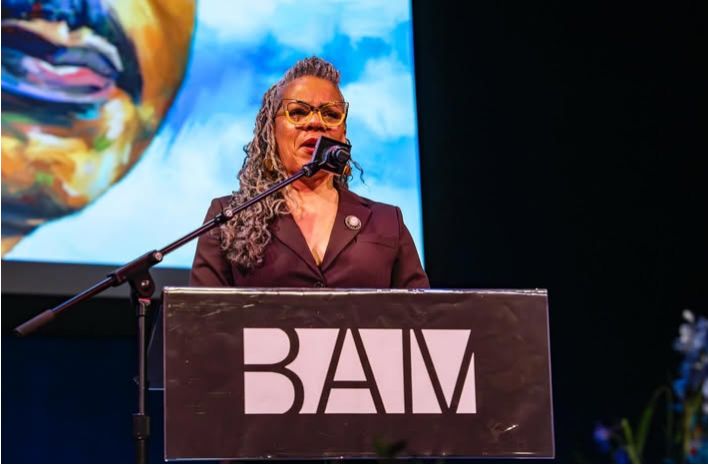
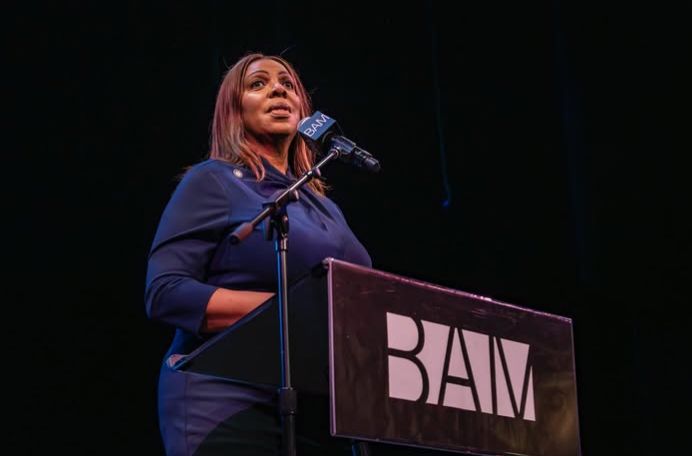
- The Political Vanguard: Seeing New York State Attorney General Letitia James, Brooklyn District Attorney Eric Gonzalez (appearing in the captured moments), and NYC Mayor Zohran Mamdani read these words was a transformative experience. When a public prosecutor or a legislator speaks King’s warnings about the “perversion of the ego,” the words take on a heavy, accountability-laden significance.
- The Advocates: Public Advocate Jumaane Williams and Rita Joseph, a New York City Council Member (District 40, Brooklyn) and Chair of the Education Committee and others represented the friction and the fire of the street-level struggle for equity.
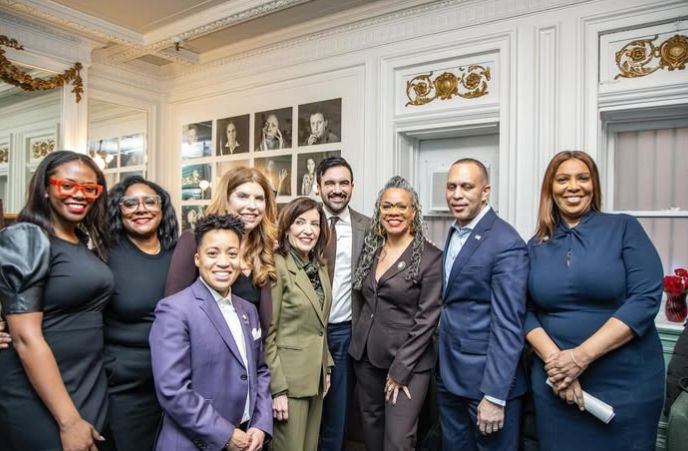
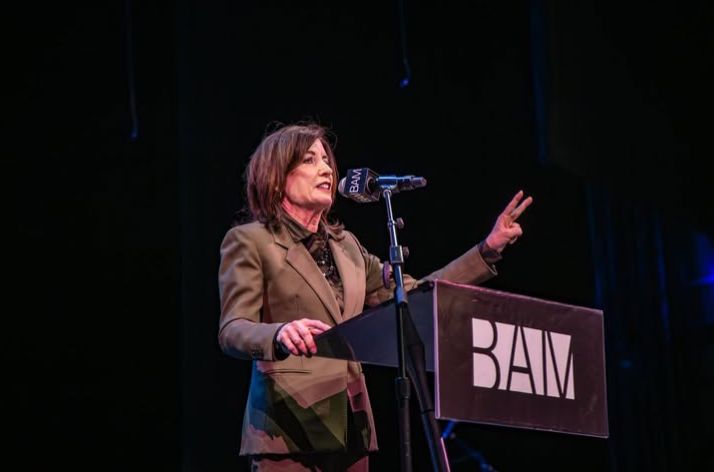
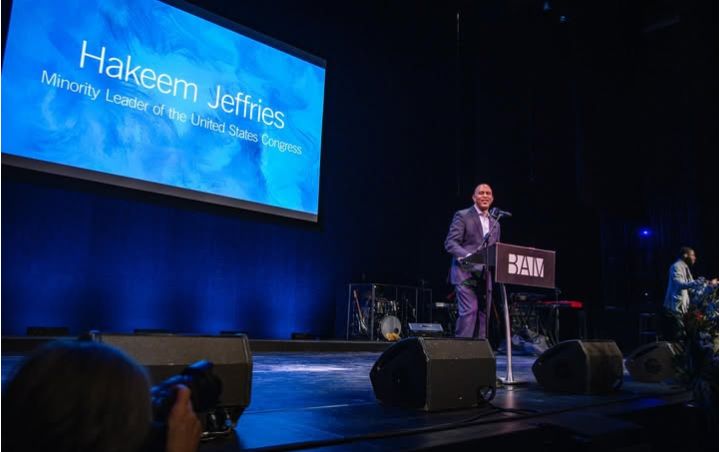
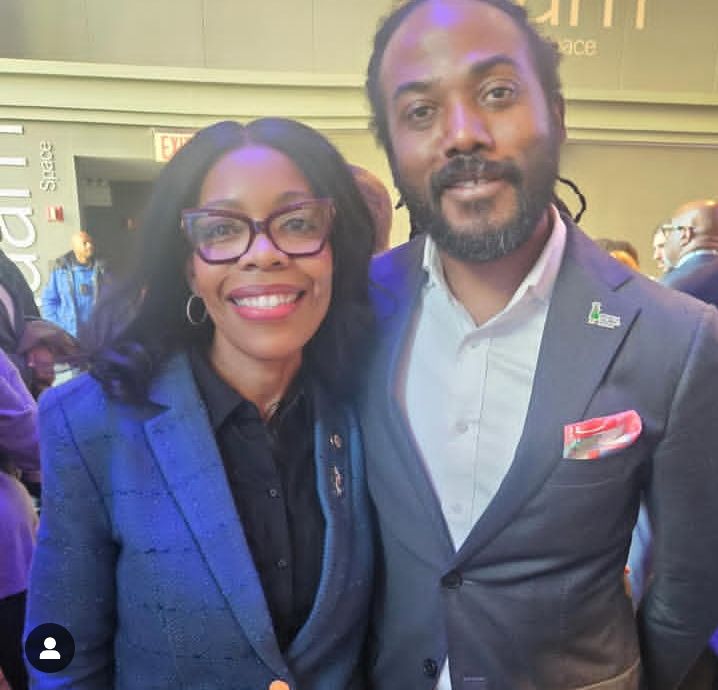
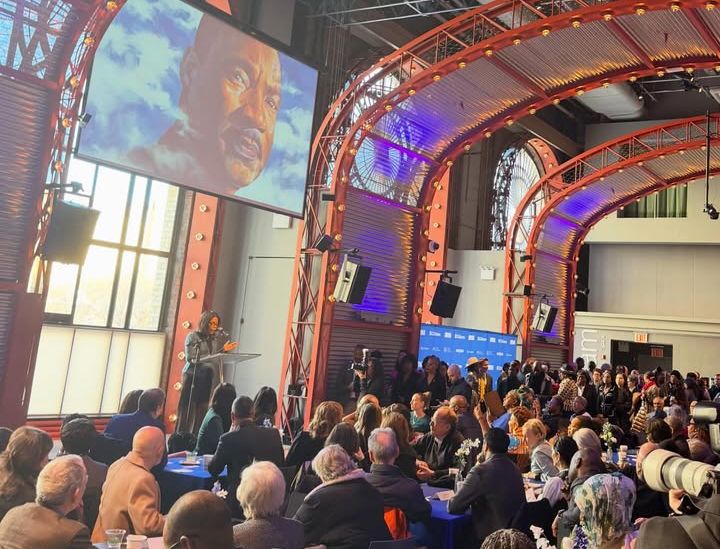
The photos from the event capture this gravity. In one, Governor Kathy Hochul and Minority Leader Hakeem Jeffries stand alongside fellow leaders—a visual testament to the “Drum Major” instinct within the political sphere. The images show a diverse audience bathed in blue light, eyes fixed on the stage, suggesting a collective hunger for a moral compass in an era often defined by division.
The Sonic Soul: Phil Woodmore and the Choir
No MLK tribute is complete without the spiritual architecture of music. Composed and arranged by Dr. Philip Woodmore, the performance was buoyed by a choir that was, in itself, a social experiment. Featuring singers from St. Louis and Brooklyn—including police officers, activists, and faith leaders—the music acted as the emotional glue for the sermon.
When Marcelle Davies-Lashley and the soloists broke into song, they weren’t just providing an interlude; they were providing the “heart-logic” to Dr. King’s “head-logic.” The juxtaposition of activists and police officers singing in harmony provided a visceral, if fleeting, image of the “Beloved Community” King dreamed of—a community not without conflict, but one that chooses to resolve that conflict through a shared commitment to a higher truth.
Theater of War: Art as a Public Health Tool
The significance of Theater of War Productions in this equation cannot be overstated. Directed by Bryan Doerries, the organization specializes in using classical and historical texts to address modern traumas. By framing “The Drum Major Instinct” as a “Theater of War,” the production treated Dr. King’s words as a diagnostic tool for a society suffering from the “war” of inequality and the “war” of the self.
The second half of the program—the facilitated audience discussion—is where the real work happened. Co-facilitated by Doerries and De-Andrea Blaylock-Solar, the discussion invited the audience to move from being spectators to being participants. They were asked: Where do you see the Drum Major Instinct in your own life? How does this desire to be first hinder our collective progress in 2026?
The BAM Legacy and the Path Forward
BAM has long been a sanctuary for the avant-garde and the socially conscious. By hosting this specific production, BAM reaffirmed its role as Brooklyn’s “town square.” The event served as a reminder that the legacy of Dr. King is not found in the “I Have a Dream” soundbites that are often sanitized for corporate consumption. Instead, his legacy is found in the “Drum Major” instinct—the uncomfortable, grit-under-the-fingernails work of checking one’s ego and pivoting toward service.
As the images from the evening show, the room was a tapestry of New York’s leadership and its citizenry. From the presence of Hakeem Jeffries to the intense, focused gaze of the local activists in the crowd, the event was a “state of the union” for the soul of the city.
Conclusion: The Baton of Service
In 1968, Dr. King said, “We all want to be important, to surpass others, to achieve distinction, to lead the parade.” In 2026, as the world moves faster and the desire for “status” is amplified by digital echoes, his warning is more urgent than ever.
The collaboration between Theater of War and BAM provided more than a performance; it provided a blueprint. It suggested that if we are to survive the complexities of the 21st century, we must learn to march to a different beat. We must redefine what it means to lead. As the lights dimmed in Brooklyn, the message left with the audience was clear: The parade is still moving. The question is, where are you leading it?



Fast indexing of website pages and backlinks on Google https://is.gd/r7kPlC
The dream still hasn’t been realized
It’s actually a cool and helpful piece of information. I’m glad that you shared this helpful info with us. Please keep us up to date like this. Thanks for sharing.