







By Salhiram Balthazar, Brand Marketing Strategist
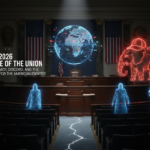
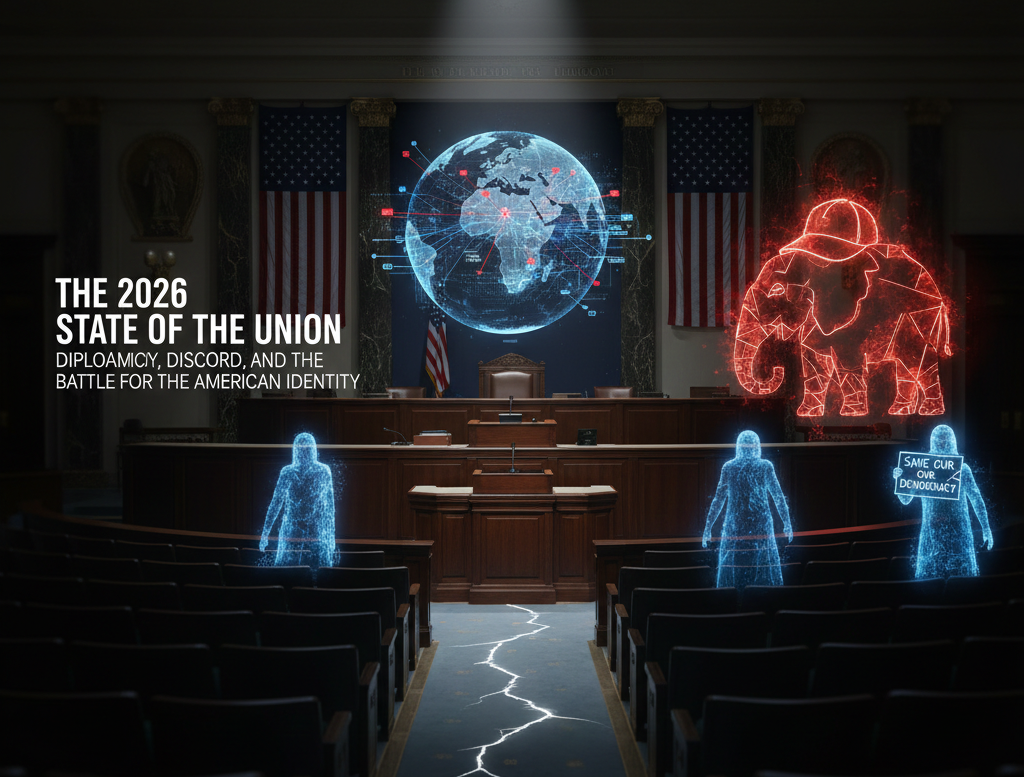
The 2026 State of the Union address, delivered on February 24th, will be remembered as a seismic moment in American political history—not necessarily for the legislation proposed, but for the visceral collapse of traditional decorum. For a Brand Marketing Strategist like myself, the evening was a masterclass in high-stakes, polarizing messaging. While the President attempted to market a “Turnaround for the Ages,” the brand of American unity was under visible, audible strain.
Inside the House chamber, the air was thick with a level of animosity that transcended mere policy disagreement. It was a night defined by shouting matches, historic boycotts, and a rhetorical line in the sand that questioned the very definition of “American.”
Diplomacy: A Hardline “America First” 2.0
The President’s foreign policy segment was a stark departure from the globalist leanings of the previous decade. Framing his strategy as “Realism over Romanticism,” the President leaned heavily into protectionism and unilateralism.
- The Supreme Court Shadow: Only four days prior, the Supreme Court struck down the administration’s sweeping global tariffs as an overreach of executive authority. The President used the SOTU to lash out at the “unfortunate” ruling, staring directly at the four attending justices as he announced he would pursue “legal alternatives” to keep foreign goods at a disadvantage.
- The Iran Threshold: Diplomacy was framed through the lens of strength. While claiming he wanted to avoid “forever wars,” the President warned that Iran was “pursuing sinister ambitions” and vowed he would never allow them to reach nuclear capability. The rhetoric signaled a move away from multilateral agreements in favor of maximum pressure.
- Ukraine and Russia: In a claim that drew sharp scoffs from the Democratic side, the President asserted that the “slaughter” in Ukraine would have never happened under his watch and claimed his administration was now “working hard” to end the conflict, though details remained scarce.
The Economy: A “Golden Age” vs. The Cost of Living
The President painted a picture of an economy that was “bigger, better, richer, and stronger than ever before.” He touted the 250th anniversary of American independence as the dawn of a new economic era. However, the chamber was split on which reality to believe.
- The Federal 401(k) “Match”: In perhaps the most significant policy announcement of the night, the President unveiled a plan to create “Trump Accounts”—a federal retirement-savings initiative for the 56 million Americans without employer-sponsored plans.
- The Hook: The administration proposed a federal matching contribution for low-to-moderate-income workers. This “Saver’s Match” would effectively turn the federal government into a “backup employer” for retirement security.
- The Friction: Democrats immediately questioned the funding, shouting, “With what money?” as they pointed to the deficit-expanding tax cuts previously passed. The proposal is an attempt to bridge the wealth gap, but in this climate, even a government “handout” for retirement was met with skepticism from the opposition.
Policy: The SAVE America Act and Domestic Control
On the domestic front, the President pivoted to the “SAVE America Act,” a controversial bill requiring proof of citizenship for voter registration.
He framed the bill as “very simple” and essential to stopping “rampant cheating.” When he called on Senate Majority Leader John Thune to push it through, the Republican side erupted in raucous applause. Democrats, however, remained seated, with some yelling “Disenfranchisement!”—reflecting the deep-seated fear that the policy is designed to target immigrant and minority voting blocs.
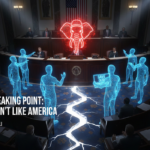
The Breaking Point: “You Don’t Like America”
The most shocking moments of the night occurred when the President abandoned his teleprompter to address the Democratic caucus directly. In a departure from the “State of Our Union is Strong” tradition, he characterized the opposition not as political rivals, but as internal threats.
“The revolution that began in 1776 continues,” the President declared, “because the flame of liberty burns in the hearts of every American patriot. But some in this room don’t want that flame to burn. They don’t like America. They want to open our borders to criminals and let the fabric of our nation be shredded.”
The response was immediate and chaotic.
- Accusations of Disloyalty: The President explicitly accused Democrats of prioritizing “illegal aliens” over “American citizens,” at one point asking the room to stand if they believed the government’s first duty was to protect Americans. When most Democrats remained seated, he sneered, “I guess we know where they stand.”
- The Shouting Matches: Rep. Ilhan Omar (D-MN) was a frequent target of the President’s rhetoric, particularly regarding his “war on fraud” targeting Somali-American communities. Omar repeatedly shouted “Liar!” and “You’re a liar!” back at the rostrum.
- Expulsions and Protests: Rep. Al Green (D-TX) was escorted out of the chamber after holding up a sign protesting the President’s recent social media posts. Rep. Norma Torres (D-CA) held up placards of individuals killed during recent federal immigration operations, shouting “Premeditated murder!” as the President praised ICE.
The tension was so high that even moments of intended unity—like the introduction of the U.S. Men’s Olympic Hockey team—were used as weapons. After the team received a standing ovation, the President took a dig at the Democrats, joking that he was surprised they even stood up for “American winners.”
The Brand Implications for Heru Vision
As a brand strategist, Salhiram, you understand that a brand is a promise of consistency. The “American Brand” on display during the 2026 SOTU was one of extreme volatility. When the leader of a nation accuses half of the legislative body of being “un-American” or “seditious,” it creates a marketplace of uncertainty.
For businesses and consulting firms like Heru Vision, this political climate necessitates a “Crisis Branding” approach. Corporations can no longer remain neutral when the definition of “American” is being litigated on the House floor. The tension between the President and the Democrats has moved beyond policy into the realm of identity, meaning brand loyalty in 2026 is increasingly tied to political alignment.
Conclusion: A Union in Name Only
The 2026 State of the Union was a record-breaking 1 hour and 48 minutes of confrontation. While the President touted a “prosperous and respected” nation, the reality within the Capitol walls was a mirror of a country divided. The “US Government Match” for 401(k)s may offer a glimmer of economic hope for some, but it is likely to be buried under the weight of a domestic “cold war” between the executive branch and the opposition.
The state of our union is, currently, a state of deep and loud disagreement. As we head toward the midterms, the shouting in the chamber is likely just a rehearsal for the shouting that will take place at the ballot box.

Pingback: The Breaking Point: "You Don't Like America" – A SOTU Retrospective on Rhetoric and National Identity - Heru Vision Consulting