











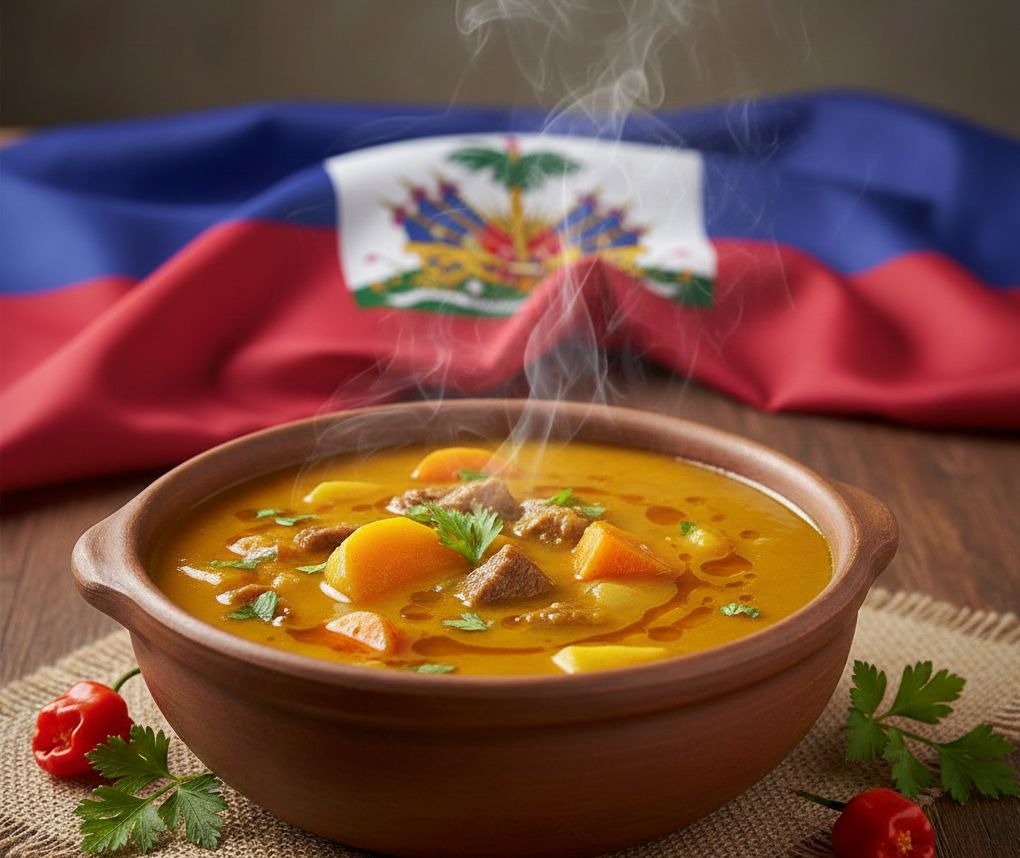
By Salhiram Balthazar NEW YORK – On January 1, 1804, the world as the colonial powers knew it came to an end. While empires across Europe and the Americas were built on the backs of the enslaved, a courageous nation of men and women in the Caribbean achieved the impossible. They didn’t just fight for freedom; they won it, establishing Haiti as the first free Black Republic in the world.
But if you ask any Haitian how they celebrate this monumental victory, they won’t just point to a flag or a monument. They will point to a steaming, vibrant bowl of Soup Joumou.
A Revolution That Shook the Continents
The Haitian Revolution was not a quiet event; it was a global upheaval. At the time, the “Great Powers” believed that universal human rights didn’t apply to everyone. Haiti proved them wrong.
- A Beacon for the Oppressed: Haiti’s victory sent a message of hope to enslaved people from the United States to Brazil. It proved that the system of slavery was not invincible.
- Changing the Map of America: Many people don’t realize that the Louisiana Purchase happened because of Haiti. After Napoleon’s forces were defeated by the Haitian revolutionaries, he was forced to sell French territories to the U.S., effectively doubling the size of the United States.
- The Blueprint for Freedom: Haiti became a sanctuary, offering citizenship and safety to any person of African or Indigenous descent who reached its shores.
Reclaiming the “Forbidden” Luxury
The story of Soup Joumou (Squash Soup) is perhaps the most beautiful symbol of this independence.
During the dark years of French colonization, Soup Joumou was considered a refined delicacy. Because it required specific ingredients like Caribbean pumpkin (kibbeh) and fine meats, it was viewed as a “luxury” dish. The enslaved people were the ones who grew the vegetables, tended the cattle, and cooked the soup over hot fires—yet they were strictly forbidden from eating it. To the French masters, the soup was a mark of their “superiority.” To the enslaved, it was a daily reminder of their exclusion.
January 1, 1804: The Taste of Dignity
When the Declaration of Independence was finally signed, the people made a symbolic choice that would last for centuries. Under the guidance of Empress Marie-Claire Heureuse Félicité, the wife of Emperror Jean-Jacques Dessalines, the leader the revolutionaries cooked massive pots of this “forbidden” soup.
They didn’t just eat it; they shared it with everyone. By consuming the very dish that was once used to exclude them, they turned a tool of oppression into a celebration of equality. They weren’t just eating soup; they were eating their own freedom.
A Living Legacy
Today, Soup Joumou is recognized by UNESCO as part of the Intangible Cultural Heritage of Humanity. Every New Year’s Day—Premye Janvye—Haitians around the world gather to prepare this dish.
When we eat Soup Joumou, we remember:
- Libète ou Lanmò: Liberty or Death.
- The ancestors who turned a “luxury” into a birthright.
- That no matter how dark the oppression, the hunger for freedom will always prevail.
This year, as we celebrate, let’s remember that Haiti’s independence belongs to the history of all humanity. Every bowl of soup is a tribute to the courage it takes to demand a seat at the table.



https://shorturl.fm/kLywE
Hey would you mind letting me know which web host you’re working with? I’ve loaded your blog in 3 different internet browsers and I must say this blog loads a lot faster then most. Can you suggest a good hosting provider at a honest price? Many thanks, I appreciate it!
What’s Happening i’m new to this, I stumbled upon this I’ve found It absolutely helpful and it has aided me out loads. I hope to contribute & assist other users like its aided me. Great job.