










By Salhiram Balthazar, Editor-in-Chief
Published on Heru Vision
Non-profit aids children in ICE custody ABC’s Linsey Davis speaks with the co-founder of Each step home, Casey Revkin, about her efforts to raise donations for immigrant children in ICE custody who need medical and food essentials.
When we first broke the story on November 8, 2026, the structural fragility facing members of the Haitian diaspora was laid bare in a single, gut-wrenching event. An 8-year-old Haitian third-grader from Fay Elementary School was taken into federal custody during what was supposed to be a routine immigration check-in at the Edward J. Schwartz Federal Building in downtown San Diego. At the time, our community stood in collective shock, grappling with an agonizing central paradox: how can compliance with a mandatory, transparent government check-in serve as a direct pipeline to federal detainment?
In the days since that initial report, what began as a local institutional failure has rapidly escalated into a national political flashpoint. The administrative machinery of the Department of Homeland Security (DHS) and Immigration and Customs Enforcement (ICE) has doubled down on its procedural defense, while a powerful coalition of California lawmakers, civil rights organizations, and educators has mounted a fierce counter-offensive. The latest developments expose a profound battle over the definition of child safety, the introduction of disturbing physical evidence, and the emergence of a heartbreaking new phrase within our community: “orphans by deportation.”
The Catalyst: Compliance Trapped by Bureaucracy
To understand the latest escalation, we must revisit the bureaucratic trap sprung on November 4, 2026. The young boy—having lost his Temporary Protected Status (TPS) earlier in the year due to ongoing federal shifts—arrived at his scheduled appointment neatly dressed, accompanied by his uncle. For over a year, this child had relied on the stability of his uncle’s household following a prior tragedy: federal agents had already deported his father to Mexico, notably failing to provide a formal window for the family to establish legal state-recognized guardianship.
When the uncle acted in absolute good faith to comply with federal monitoring, ICE protocol overrode human reality. Because the uncle lacked formal legal custody documents that satisfied federal thresholds, agents invoked the Trafficking Victims Protection Reauthorization Act (TVPRA). By reclassifying a deeply loved public school student as an “unaccompanied alien child” (UAC), the agency effectively erased his family structure in a matter of minutes, moving him into the custody of the Office of Refugee Resettlement (ORR).
The Political Flashpoint: Lawmakers Allege Physical Restraints
The administrative wall of silence cracked on Tuesday, November 10, 2026, when a high-profile group of six California Democratic lawmakers forced the case onto the national stage. Led by U.S. Senators Alex Padilla and Adam Schiff, alongside local San Diego Representative Juan Vargas, the legislators fired off a blistering oversight letter to DHS Secretary Markwayne Mullin and HHS Secretary Robert F. Kennedy Jr.
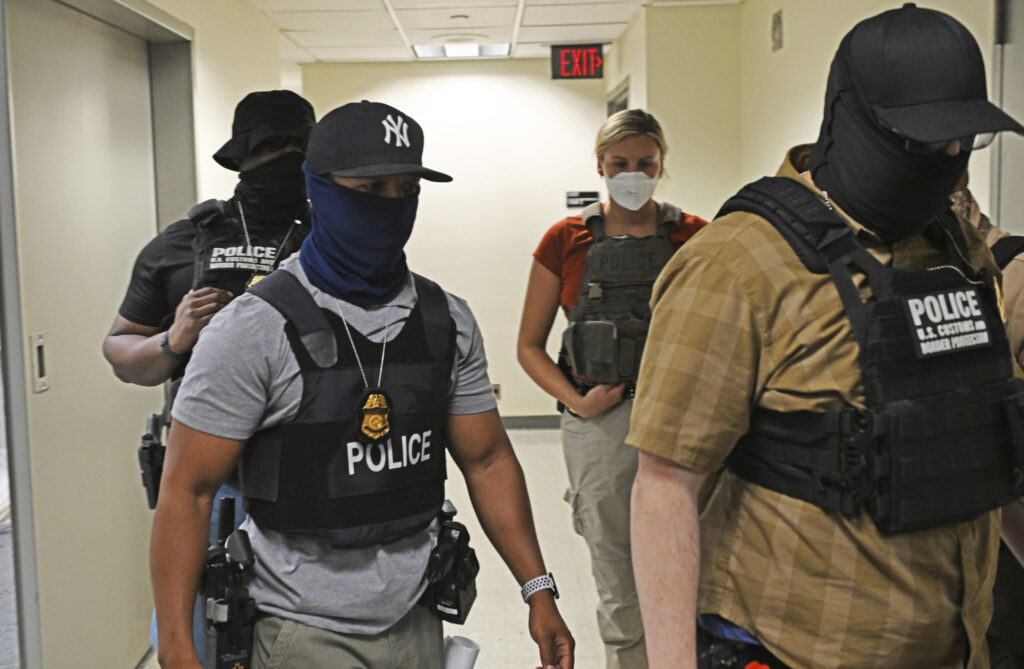
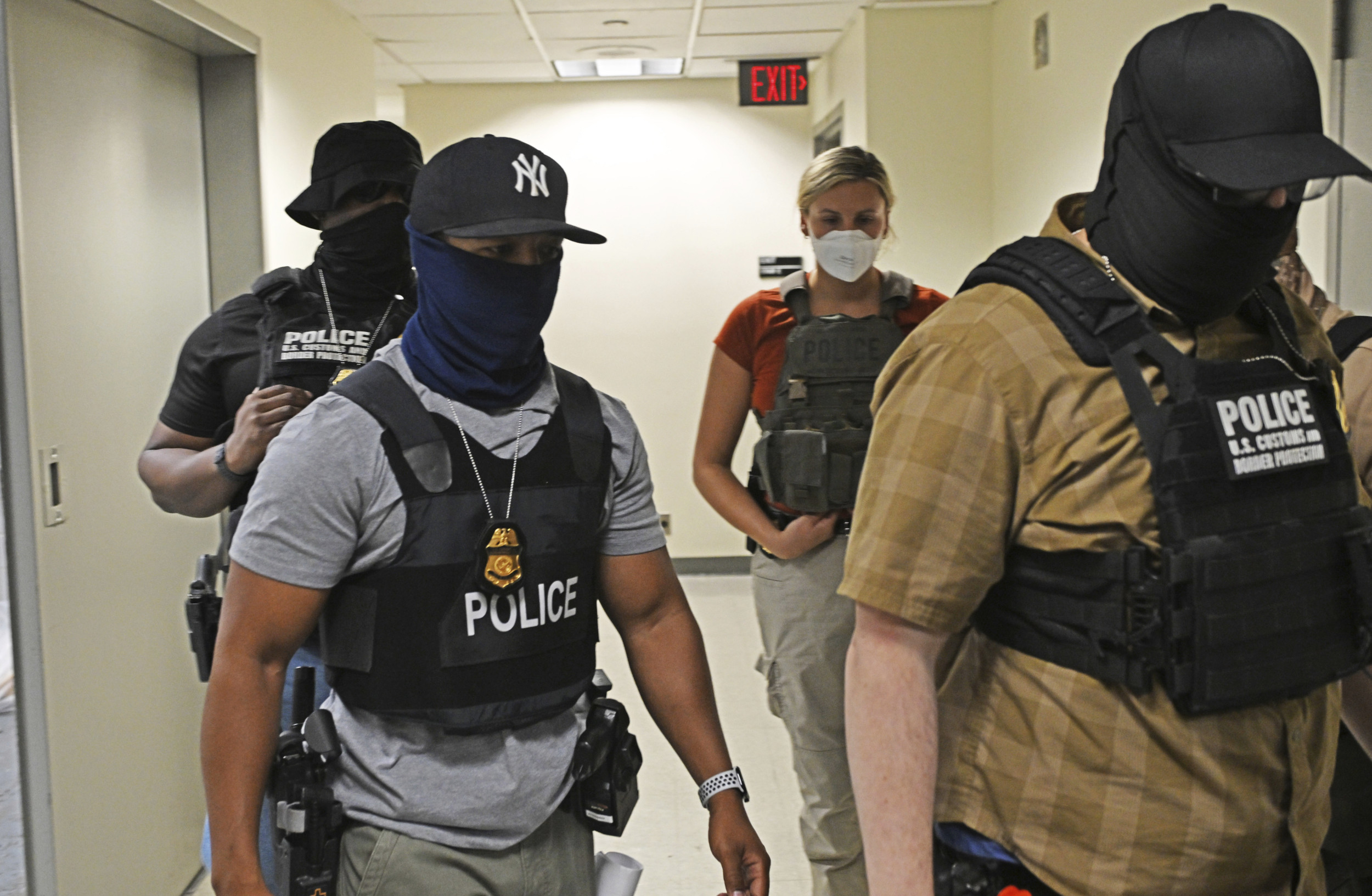
The letter introduced a deeply disturbing new allegation that has sent shockwaves through the diaspora: the suspected use of physical restraints on a third-grade child. Lawmakers cited reviewed video footage from the November 4 incident, which reportedly shows the 8-year-old being escorted out of the federal facility with his hands secured behind his back.
Rep. Juan Vargas did not mince words in his public remarks, questioning the fundamental morality of an agency that deems it necessary to bind the hands of an 8-year-old boy who posed absolutely no physical threat and had arrived willingly at their doors. The introduction of this video evidence has transformed the discourse from a debate over sterile custody paperwork into an urgent, visceral interrogation of systemic cruelty. The congressional inquiry explicitly demands an immediate investigation into the use of force, verification of the child’s physical conditions, and a strict timeline for family reunification.
The Battle Over Location and Transparency
For days, local school administrators and the Haitian Bridge Alliance raised alarms that the young boy was entirely lost within the labyrinthine federal network, with early indicators suggesting he had been quietly moved to a facility in Los Angeles.
A critical update has emerged from the legal team representing the family. Journalists have confirmed that the family’s attorney now possesses exact knowledge of where the child is being held under ORR jurisdiction. However, in a stark reflection of the hostile political climate, the legal team and the family are deliberately withholding the exact name and location of the facility from the public. Their strategy is born out of intense caution; they fear that a media circus outside the facility’s gates could prompt federal authorities to abruptly transfer the child again, dragging out the vetting process and further complicating his release.
ICE Fires Back: The War of Narratives
In response to the mounting congressional pressure and community outrage, DHS and ICE high-level officials issued a fierce public counter-statement defending their personnel. The agency directly slammed the allegations, labeling public reports that the child was thrown into an immigration detention center as “FALSE” and characterizing the outcry as a “depraved attempt to smear our law enforcement officers.”
The agency’s defense relies strictly on a literalist, rigid interpretation of the TVPRA. According to ICE’s legal stance, personnel did not “detain” the child out of hostility, but rather intervened “out of an abundance of caution” because the accompanying adult could not produce immediate, court-certified custody papers. From the institutional perspective, a child without a legally recognized parent or guardian on American soil must be treated as unaccompanied to prevent exploitation.
Yet, this rigid logic completely ignores the systemic loop created by the government itself. It is the federal apparatus that manufactured this child’s vulnerability by deporting his father without due process for family planning, leaving the uncle to step into the void—only to later penalize the uncle for doing so.
“Orphans by Deportation” and the Toll on Fay Elementary
While the narrative wars play out in Washington and downtown press rooms, the immediate, human toll of this protocol is being felt heavily at Fay Elementary School. The San Diego Unified School District (SDUSD) has taken the extraordinary step of deploying specialized crisis counseling teams to the school to help young students process the terrifying reality of their classmate’s empty desk.
Activists and local leaders have coined a harrowing new phrase to describe this phenomenon: “orphans by deportation.” This term cuts to the core of the institutional violence facing immigrant families. It describes a cruel, manufactured cycle:
- The state deports the parents.
- The extended family shelters the left-behind youth.
- The state returns to seize the child under the guise of protecting them from a lack of legal guardians.
It is an administrative trap that systematically dismantles the family unit.
The Call to Action: Community Mobilization
The time for quiet diplomacy has passed. San Diego County Supervisor Monica Montgomery Steppe and City Councilmember Sean Elo-Rivera have announced a massive public mobilization and protest scheduled for Thursday, November 12, 2026, outside the federal courthouse.
At Heru Vision Media, we will continue to trace every development of this case, amplify the voices of the lawmakers fighting for transparency, and stand firmly with the Haitian Bridge Alliance. We urge our readers to show up, speak out, and ensure that our children are kept where they belong: in our classrooms, wrapped in the safety of their communities, and free from the trauma of federal custody..
Haitian, 20, dies by suicide after losing TPS status, advocacy group says A 20-year-old Haitian who had just graduated high school and had recently lost temporary protected status died by suicide Monday, according to an advocacy group. – ABC News
This rally is not just a demand for the release of one third-grader; it is a defensive stand for the universal dignity of our global diaspora. We cannot allow standard institutional protocol to serve as a shield for human rights abuses. Also, let’s remember Pierre Damas, the Haitian High School graduate who committed suicide after losing TPS status and was being monitored with an ankle bracelet. If compliance with the law is met with physical restraints and family separation, then the system itself is broken.