







On the night of July 4, 2016, a tragic encounter in East New York shattered a family and ignited a decade-long struggle for justice. Delrawn Small, a 37-year-old Black father, was shot and killed by off-duty NYPD Officer Wayne Isaacs during a traffic dispute on Atlantic Avenue. Small was unarmed, and his four-month-old infant son and teenage stepdaughter were inside his vehicle nearby.
Video surveillance revealed that Isaacs unholstered his firearm and fired three shots through his open car window seconds after Small approached his vehicle. Isaacs then drove away without administering medical assistance or notifying 911 dispatchers that he had discharged his service weapon.
Though Isaacs was criminally charged by the New York State Attorney General’s Office, a jury acquitted him of murder and manslaughter in 2017. Yet, more than a decade after the shooting, the quest for basic departmental accountability remains unresolved, serving as a stark reminder of the hurdles surrounding police oversight in New York City.
Standing Front-and-Center: Public Advocate Jumaane Williams and Community Leaders
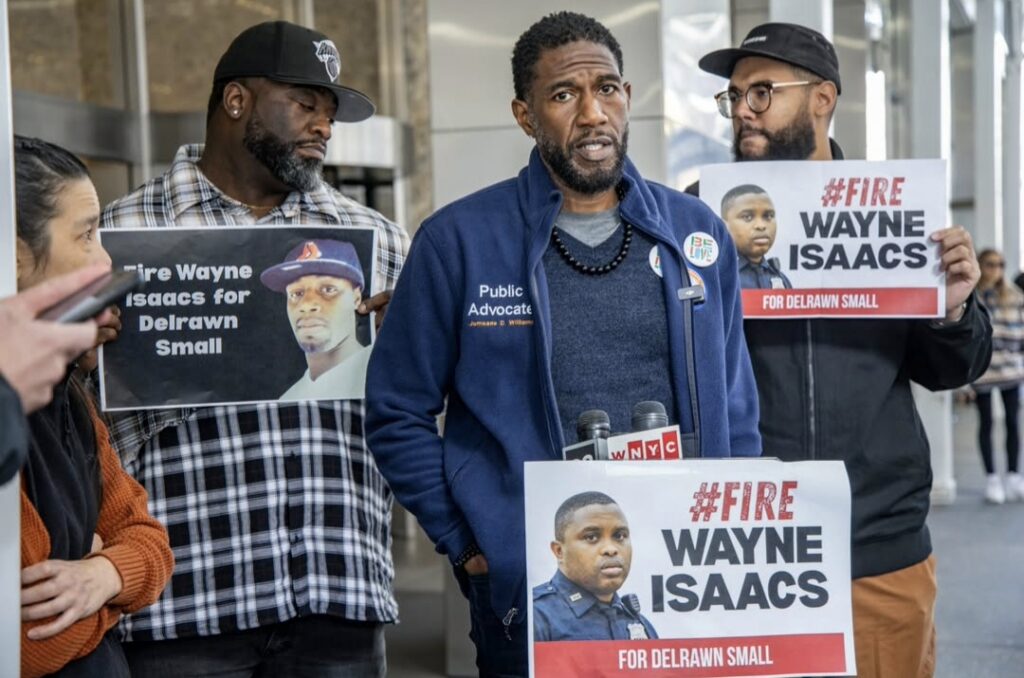
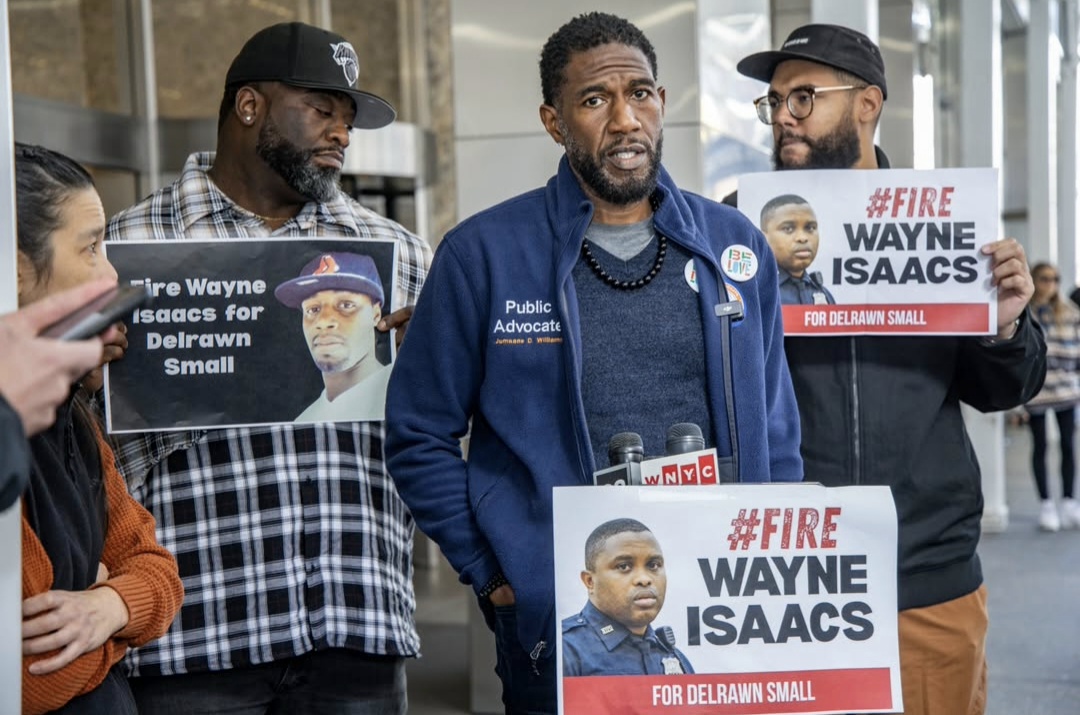
Throughout this prolonged battle, NYC Public Advocate Jumaane Williams, alongside elected allies like State Senator Julia Salazar and grassroots coalitions such as Communities United for Police Reform (CPR) and the Justice Committee, has consistently stood shoulder-to-shoulder with Delrawn Small’s siblings, Victor Dempsey and Victoria Davis.
Public Advocate Williams has repeatedly pointed out the glaring double standards within administrative accountability:
- Exposing Procedural Maneuvers: Williams has publicly condemned legal and administrative efforts aimed at shielding off-duty officers from standard disciplinary rules. When union lawyers argued that off-duty misconduct shouldn’t face departmental trials in the same way, Williams labeled the stance a dangerous precedent that undermines public trust.
- Demanding Executive Action: Alongside the Small family, Williams has directly petitioned successive City Hall administrations and the NYPD Commissioner to proceed with internal disciplinary hearings and terminate Officer Isaacs from the force.
- Centering the Family’s Voice: Williams’ platform has amplified the family’s message—ensuring that Delrawn Small is remembered not merely as a headline, but as a father, brother, and community anchor whose family deserves closure.
- CCRB Charges Substantiated: The Civilian Complaint Review Board (CCRB) substantiated disciplinary charges against Isaacs years ago, recommending his termination.
- Administrative Delays & Legal Wrangling: Years of procedural motions, legal appeals over unsealing trial records, and departmental delays continually pushed back internal proceedings.
- Current Disciplinary Status: Even after years of activism, legal challenges and internal NYPD recommendations to dismiss or stall charges have repeatedly forced the family and community allies back to the steps of City Hall to demand that NYPD leadership allow the departmental trial to move forward to a final determination.
How You Can Support
- Stay Informed: Follow local updates through advocacy organizations like Communities United for Police Reform and the Justice Committee.
- Amplify the Message: Share news articles and community calls to action on social media to keep Delrawn Small’s legacy and his family’s demand for accountability visible.
- Engage Local Representatives: Urge local elected officials to support independent civilian oversight of police disciplinary processes.