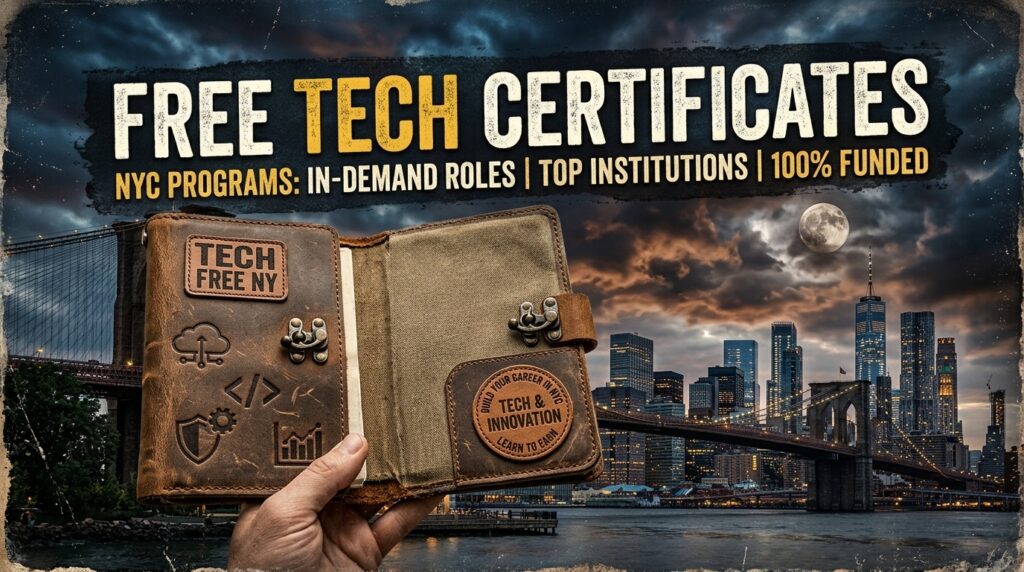











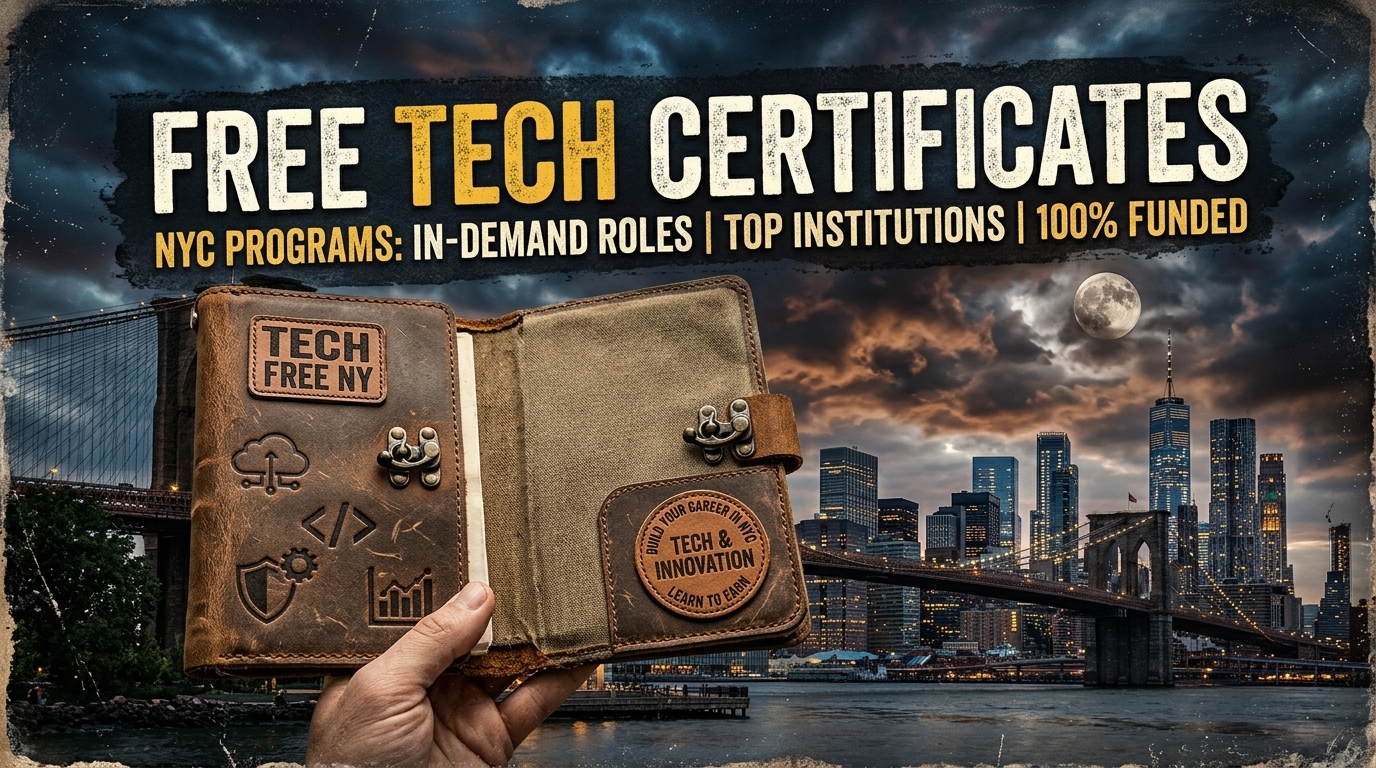
In an economy increasingly shaped by rapid digital transformation, access to technical skills is no longer optional—it is the foundation of economic mobility and community resilience. For many within the diaspora, the primary hurdle isn’t a lack of ambition or talent; it is navigating the overwhelming noise of modern tech education to find legitimate, accessible pathways.
This guide outlines clear, actionable steps for obtaining industry-recognized tech certifications in New York City without taking on student debt, bridging the gap between talent and opportunity.
1. Why Focus on Industry Certifications?
While traditional four-year degrees offer deep foundational knowledge, specialized certifications provide targeted proof of skill that modern employers prioritize:
- Speed to Market: Most certification tracks can be completed within 3 to 6 months of focused study.
- Practical Competency: Programs focus on applied skills—such as cloud administration, data analytics, project management, and cybersecurity fundamentals.
- Intergenerational Value: Skills learned through modern digital architecture can be taught, shared, and scaled within families and local businesses.
2. Top Free and Low-Cost Tech Programs in NYC
Several institutionally backed initiatives in New York City offer tuition-free training and exam vouchers for qualified residents:
- NYC Tech Workforce1 & Training Programs Managed by the NYC Department of Small Business Services (SBS), these programs provide free, intensive web development, cyber defense, and data analytics training geared directly toward placing graduates into NYC tech roles.
- CUNY Continuing and Professional Education (CPE) The City University of New York system offers subsidized non-credit technology tracks, micro-credentials, and industry exam prep across multiple boroughs.
- Coursera and Department of Labor New York State Department of Labor has partnered with Coursera to provide no-cost access to thousands of courses and industry-recognized professional certificate programs.
- Public Library Tech Centers (NYPL & Brooklyn Public Library) Both library systems offer free access to premium learning platforms, hands-on computer labs, and specialized workshops on software tools, coding fundamentals, and digital literacy.
3. Recommended Entry-Level Certification Pathways
If you are just getting started, focus on these core paths:
| Focus Area | Entry Certification | Core Skills Covered | Primary Industry Use |
| Cloud & Architecture | AWS Certified Cloud Practitioner / Azure Fundamentals | Cloud concepts, security compliance, architecture basics | Enterprise IT, startup infrastructure |
| Data & Analytics | Google Data Analytics Professional Certificate | Data cleaning, SQL, R programming, spreadsheet mastery | Marketing strategy, business intelligence |
| Project & Process | Google Project Management Certificate / CAPM | Agile frameworks, project documentation, resource planning | Operations, agency management |
| Cybersecurity | CompTIA Security+ | Network security, risk management, threat mitigation | Security analysis, IT administration |
4. Execution Plan: From Registration to Certification
To move from interest to completion, follow this simple execution framework:
- Audit Your Availability: Commit to a consistent 5 to 7 hours per week dedicated to self-paced study or evening coursework.
- Leverage Free Learning Vouchers: Utilize local workforce resources or library partnerships to secure exam vouchers to cover testing fees.
- Build While You Learn: Apply concepts immediately by creating practical projects—such as building local business audit scripts, organizing datasets, or creating functional landing pages.
- Publish Your Credentials: Once certified, add your credentials to your digital portfolio, resume, and professional network profiles to establish immediate authority.
Strategic Community Vision
Empowerment comes through execution. By acquiring digital tools and sharing knowledge across generations, we strengthen our collective autonomy and ensure our community remains at the forefront of the modern digital economy.